Aluminized Steel vs. Stainless Steel by Application: Exhaust, HVAC, Appliances & More | MESCO
- Share
- publisher
- Yilia
- Issue Time
- Mar 12,2026
Summary
Which material wins in automotive exhaust, HVAC, ovens, pipelines, and food processing? MESCO's application-by-application guide to choosing between aluminized silicon steel and stainless steel.
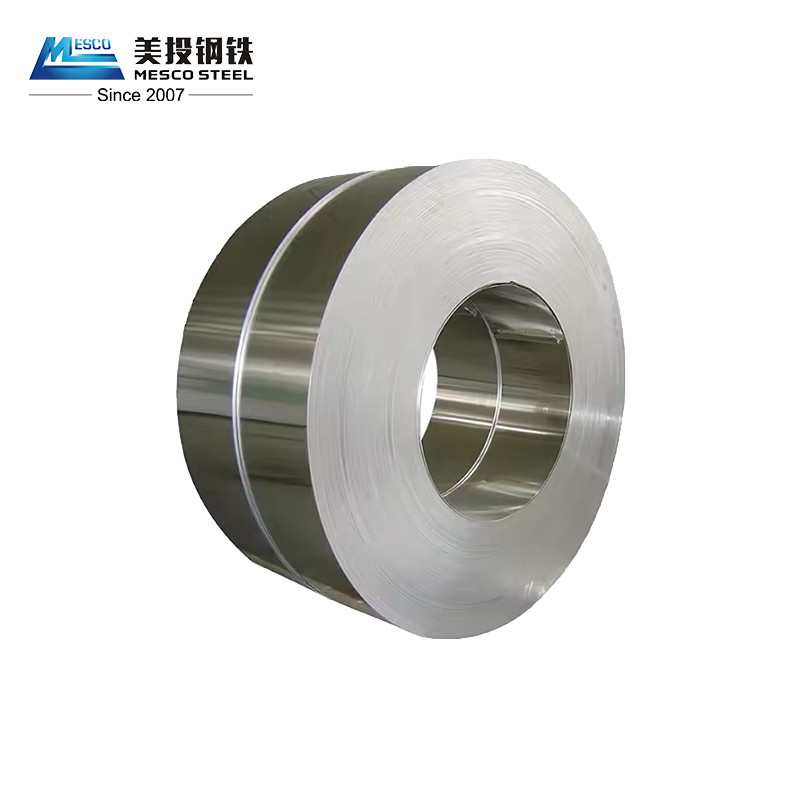
Aluminized Silicon Steel vs. Stainless Steel:Which Material Wins in Your Industry?
The debate between aluminized silicon steel sheet and stainless steel is not a debate with a universal answer — it is an application-specific decision that depends on the thermal environment, corrosive exposure, mechanical demands, fabrication process, and cost structure of your project. Having supplied aluminized silicon steel to customers across automotive, HVAC, appliance, oil and gas, and industrial sectors for over two decades, MESCO has developed a clear view of which material is optimal for each use case. This article delivers that view in plain terms, application by application.
Application 1: Automotive Exhaust Systems
The Environment
Exhaust systems face a uniquely demanding combination of conditions: sustained high temperatures (400–700°C at the manifold, 200–400°C at the muffler), condensate acid attack during cold starts (dilute sulfuric and carbonic acids), road salt exposure from the exterior, and continuous thermal cycling across the lifetime of the vehicle.
The Verdict: Aluminized Silicon Steel for OEM; Stainless for Performance
For original equipment manufacture across the global automotive industry, aluminized silicon steel sheet to ASTM A463 Type 1 (typically AS120 coating weight) is the standard material for muffler shells, tailpipes, and mid-pipe sections. It provides adequate heat resistance, good condensate acid resistance, and a service life that aligns with vehicle warranty requirements, at 30–50% lower cost than 409 stainless steel alternatives.
Performance exhaust manufacturers and aftermarket suppliers specify 304 or 409 stainless steel when a longer service life, polished appearance, or marketing positioning of "stainless" is a product differentiator. The 304 stainless exhaust will outlast an aluminized system by several years in most environments — but at a cost that the majority of vehicle manufacturers cannot justify for standard production.
●OEM exhaust (muffler, mid-pipe, tailpipe): Aluminized Silicon Steel — AS120, ASTM A463 Type 1 · MESCO stock available
●Performance / aftermarket exhaust: Stainless Steel — 304 or 409 depending on budget and environment
●Exhaust manifolds (>600°C zone): Stainless Steel (321 / 309) or cast iron — aluminized steel not rated for this range
Application 2: HVAC and Ventilation Ductwork
The Environment
HVAC ductwork and air handling components operate at moderate temperatures (up to 200°C in high-efficiency systems), with exposure to condensation, cleaning chemicals, and in commercial kitchen applications, grease vapors. The primary performance requirement is corrosion resistance rather than heat resistance, along with formability for the complex geometries of duct systems.
The Verdict: Aluminized Steel for Most HVAC; Stainless for Commercial Kitchens
Standard residential and commercial HVAC ductwork is almost universally fabricated from galvanized steel or aluminized silicon steel. Aluminized steel is preferred where any heat exposure is present (gas boiler flues, heat exchangers, warm-air distribution). Its combination of corrosion resistance, formability, and cost-efficiency is optimal for this application. The AS80 and AS120 coating weights from MESCO are the standard specification for HVAC aluminized steel duct.
For commercial kitchen exhaust hoods and grease duct systems, where grease deposits, cleaning chemicals, and fire resistance requirements apply, 304 stainless steel is typically code-mandated. This is not a performance selection — it is a regulatory one. Food service kitchen equipment also specifies 304 stainless for its hygienic surface and cleaning durability.
●Residential and commercial HVAC duct: Aluminized Silicon Steel — AS80/AS120 · Cost-effective, formable · MESCO stock available
●Gas boiler flues and heat exchanger shells: Aluminized Silicon Steel — AS120 · Better heat conductivity than stainless
●Commercial kitchen grease ducts: Stainless Steel 304 — code-mandated in most jurisdictions
Application 3: Household Appliances
The Environment
Appliance applications are diverse in their requirements. Oven and range interiors are exposed to sustained temperatures of 200–300°C (self-cleaning cycles up to 500°C), with cleaning chemical exposure. Dryer drums are exposed to moisture, mechanical abrasion, and moderate heat. Refrigerator interior panels require corrosion resistance and hygienic cleanability.
The Verdict: Aluminized Steel Dominates the Interior; Stainless Wins the Exterior
Oven liners and interior panels are the single largest non-automotive application for aluminized silicon steel. The material's heat resistance, thermal conductivity (which improves cooking performance), reflectivity (which improves oven efficiency), and cost-effectiveness make it the standard across the industry. Every major appliance manufacturer uses aluminized silicon steel for oven interior components. MESCO's DX53D + AS80/AS120 specification is the standard oven liner grade.
Dryer drums are another dominant application: aluminized steel's combination of smooth surface, corrosion resistance, and cost outperforms stainless steel for this use case. Stainless steel dryer drums are a premium product differentiator, not a functional requirement.
Appliance exteriors — particularly for premium kitchen appliances — specify 430 or 304 stainless steel for aesthetic reasons. The polished stainless appearance cannot be replicated by aluminized steel.
●Oven liners and interior panels: Aluminized Silicon Steel — AS80/AS120, DX53D · Industry standard · MESCO stock available
●Dryer drums: Aluminized Silicon Steel preferred — cost-effective, smooth surface, corrosion-resistant
●Appliance exteriors (premium): Stainless Steel 430/304 — aesthetic requirement
Application 4: Industrial Pipeline Insulation Jacketing
The Environment
Outdoor pipeline insulation jacketing on oil and gas facilities, refineries, and petrochemical plants represents one of the most demanding corrosion environments for metallic cladding: continuous outdoor weathering, humidity cycling, chemical vapor exposure, UV radiation, and in coastal facilities, chloride salt spray. The jacket material must also be formable into cylindrical sections and mechanically robust enough to protect insulation integrity during maintenance activities.
The Verdict: AS240 / AS300 Aluminized Steel — Stainless Not Necessary
This application is where MESCO holds an exclusive market position. Our AS240 and AS300 aluminized silicon steel sheet — the only commercially available heavy-coat grades in ready-stock supply anywhere in the world — provide corrosion performance in excess of 4,000 hours in salt spray testing. This matches or exceeds the performance of 304 stainless steel jacketing at 30–40% lower material cost and with superior formability.
The industry has historically defaulted to stainless steel jacketing for severe-environment pipelines, accepting the cost premium for the perceived performance benefit. MESCO's AS240 and AS300 grades have enabled a cost-effective alternative that is increasingly specified by major EPC contractors in the Middle East, Southeast Asia, and Europe.
●Onshore pipeline insulation (standard environments): Aluminized Steel AS120/AS240 · MESCO stock · 3-day delivery
●Offshore / coastal / chemical plant insulation: Aluminized Steel AS240/AS300 · MESCO exclusive stock · Superior cost-to-performance vs. stainless
●Cryogenic pipeline jacketing: Stainless Steel or aluminum — aluminized steel not appropriate at sub-zero temperatures
Application 5: Food Processing and Medical Equipment
The Verdict: Stainless Steel — No Alternative
Food processing equipment, pharmaceutical manufacturing, and medical device applications require materials that can withstand repeated cleaning with aggressive alkaline and acid sanitizers, maintain hygienic surface standards, and comply with food contact regulations (FDA 21 CFR, EU regulation 1935/2004). Aluminized silicon steel cannot meet these requirements: the aluminum-silicon coating is not rated for food contact, and the surface cannot withstand the cleaning protocols required.
Grade 304 stainless steel is the minimum specification for food contact surfaces; Grade 316 is preferred for highly corrosive cleaning chemical environments. This is a use case where stainless steel is simply the only appropriate choice, regardless of cost.
Application 6: Heat Exchangers and Industrial Thermal Equipment
The Verdict: Depends on Operating Temperature and Fluid Chemistry
For heat exchangers operating below 550°C with clean or moderately corrosive fluids, aluminized silicon steel offers a meaningful advantage over stainless steel through its superior thermal conductivity (50–73 W/m·K vs. 13–16 W/m·K for stainless). A thinner-wall aluminized steel heat exchanger can transfer heat as efficiently as a heavier stainless design, saving material weight and cost simultaneously.
For heat exchangers handling aggressive chemicals, high-chloride process streams, or operating above 550°C, stainless steel (316, 321, or duplex grades) is required. MESCO's engineering team can assist in evaluating the thermal and chemical parameters of specific heat exchanger applications.
●Below 550°C, clean or moderate-chemistry fluids: Aluminized Silicon Steel — thermal conductivity advantage · MESCO AS120 stock
●Above 550°C or aggressive chemistry: Stainless Steel 316 / 321 / duplex
Summary Table: Application-by-Application Recommendations
| Application | Recommended Material | Key Reason |
| OEM Automotive Exhaust | Aluminized Steel AS120 | Cost + adequate performance |
| Performance Exhaust | Stainless 304 / 409 | Longevity + appearance |
| HVAC Ductwork | Aluminized Steel AS80/AS120 | Cost + formability + heat resistance |
Commercial Kitchen Duct | Stainless 304 | Code-mandated in most regions |
Oven Liners / Dryer Drums | Aluminized Steel DX53D AS80 | Industry standard, heat + cost |
Appliance Exteriors (Premium) | Stainless 430 / 304 | Aesthetics |
Pipeline Insulation (Onshore) | Aluminized Steel AS240 | MESCO exclusive — cost vs. performance |
Pipeline Insulation (Offshore) | Aluminized Steel AS300 | Regulatory requirement |
Food / Medical Equipment | Stainless 304 / 316 | Regulatory requirement |
Heat Exchangers (<550°C) | Aluminized Steel | Thermal conductivity advantage |
Heat Exchangers (>550°C) | Stainless 316 / 321 | Temperature capability |
Material selection is ultimately a quantitative decision — one that requires knowing your operating conditions, performance specifications, and cost constraints. MESCO's technical team is available to assist at every stage of that decision process, from initial grade selection through to datasheet review, sample supply, and mill certification. With 3,000+ tons of aluminized silicon steel in ready stock across AS120, AS240, and AS300 coating weights, we can also support urgent project timelines with delivery in as little as 3 days from our Dalian facility.
Ready Stock · Fast Delivery · Get a Quote from MESCO Today
✉ Email: mesco@mescogroup.com.cn
🌐 Web: www.mescogroup.com.cn
📦 Stock: 3,000+ tons ready | AS120 · AS240 · AS300 exclusive | Delivery in 3 days