Aluminum Coil Prices in 2026: What Moved, What It Costs, and How to Avoid Coil Defects
- Share
- Issue Time
- Nov 9,2026
Summary
A 2026 buyer's read on aluminum coil prices: LME averages and inventory, regional premium spreads across China, Japan, Germany and the US, reference prices by alloy and temper, the seven defects that cause rejections, and how to read a coil quote line by line.
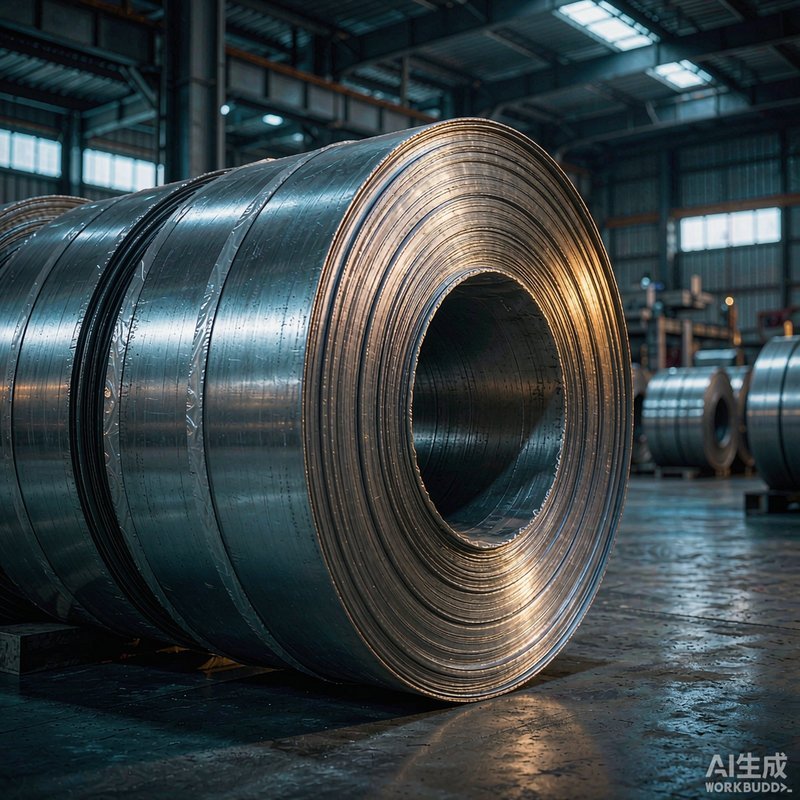
If your 2026 aluminum coil quotes came back 20% to 30% higher than the same order last year, you are not being singled out. The London Metal Exchange three-month aluminum benchmark averaged roughly USD 3,291 per tonne across January to October 2026, up about 27% from USD 2,589 per tonne in the same period of 2025. Layer regional premiums, freight, and duty on top, and two buyers ordering identical 5052-H32 coil can end up 31% apart on landed cost.
This guide breaks the 2026 aluminum coil price into its three components — metal, premium, and conversion — then turns to the other half of the cost problem: the defects that show up after the container arrives. You will find regional benchmark tables, alloy and temper reference prices, a defect-to-root-cause matrix, and a short specification checklist you can send straight to a supplier.
Aluminum Coil Prices in 2026: What Actually Moved
Three forces did most of the work this year, and only one of them is about demand.
Inventories drained. LME aluminum stocks fell 26% year on year to about 349,574 tonnes. When visible stocks drop that fast, the cash-to-three-month spread flips: 2026 moved from a USD 3 per tonne contango into a USD 15 per tonne backwardation, which is the market's way of saying nearby metal is scarce and buyers are paying for immediate delivery.
Supply could not respond. China's primary aluminum capacity has been capped at 45 million tonnes since 2017, so a price rally no longer summons new smelter tonnage the way it once did. Chinese imports of unwrought aluminum ran at roughly 185,500 tonnes per month, down 14.65% year on year, with January to August cumulative volume at 1.66 million tonnes, down 3.41%. Russia supplied about 96% of that inflow, which means the import channel is narrow as well as smaller.
Premiums became the story. Through the second half of 2026 the global average has held in a USD 3,100 to 3,450 per tonne band. For November, the working range sits at USD 3,020 to 3,150, with support at USD 2,950 to 3,020 and resistance at USD 3,180 to 3,250. In practice, the metal price is now the least volatile part of your quote.
Regional Price Spreads: Why the Same Coil Costs 31% More in the US
An aluminum coil is a globally traded commodity, but its landed price is not. The table below compares second-quarter 2026 regional averages for the same specification family.
| Region | Q2 2026 Average | What Drives the Difference |
|---|---|---|
| China | USD 2,780 / MT | Large domestic capacity base, export competition, local conversion costs |
| Japan | USD 3,090 / MT | Main Japanese Port premium settled at USD 255 / t for Q4, down 35% quarter on quarter but still up 197% year on year |
| Germany | USD 3,260 / MT | European duty-paid premium reached USD 559 / t in October, roughly double the level at the end of February; CBAM compliance adds further cost |
| United States | USD 3,640 / MT | Midwest premium above USD 1.00 / lb (about USD 2,182 to 2,352 / t) plus a 50% Section 232 import tariff |
The spread between the cheapest and most expensive region reached 31%. That gap is not a quality signal — it is a policy signal. Section 232 in the United States and the European duty-paid premium system both tax the physical metal before it ever reaches a rolling mill, and the EU's Carbon Border Adjustment Mechanism is now adding a measurable "green aluminum" premium on top for suppliers who can document lower-carbon primary metal.
For buyers in duty-free or low-duty markets, this is an arbitrage opportunity. For buyers inside the US or EU, it is a reason to specify total coating mass and gauge more tightly — paying a premium for metal you then scrap as offcut is the most common hidden loss in coil purchasing.
Alloy and Temper Reference Prices for 2026
Alloy selection moves the price as much as the regional premium does. The ranges below reflect 2026 market levels and will shift with the LME; treat them as a budgeting baseline rather than a firm quote.
| Alloy and Temper | Typical 2026 Range | Typical Use |
|---|---|---|
| 1050-O | USD 2,300 – 2,700 / MT | Deep drawing, cookware, general fabrication |
| 3003-H14 | USD 2,500 – 2,950 / MT | Roofing, cladding, signage, heat exchangers |
| 5052-H32 | USD 2,800 – 3,300 / MT | Marine, fuel tanks, pressure vessels, transport panels |
| 5083-H116 | USD 3,100 – 3,700 / MT | Shipbuilding, cryogenic tanks, heavy marine structures |
| 6061-T6 | USD 3,300 – 3,900 / MT | Structural profiles, machined parts, bicycle frames |
| 7075-T6 | USD 4.00 – 6.50 / kg | Aerospace, high-strength tooling, sporting goods |
Note the unit change in the last row: 7075 is normally traded by the kilogram, and its premium over 1050 reflects alloying additions plus the tighter process control aerospace grades demand. If a supplier quotes 7075 at 1050 pricing, the specification is wrong somewhere.
Common Aluminum Coil Defects and How to Prevent Them
Price is only half of coil cost. The other half is what you lose when a coil fails in the press or arrives stained. Most disputes trace back to a specification that left something unsaid, not to a mill that could not deliver.
| Defect | Root Cause | How to Prevent It |
|---|---|---|
| Edge cracking during forming | Slitting burr, poor edge quality, bend radius too tight for temper | Specify trimmed or rolled edge, confirm minimum bend radius for the temper, request edge photographs before shipment |
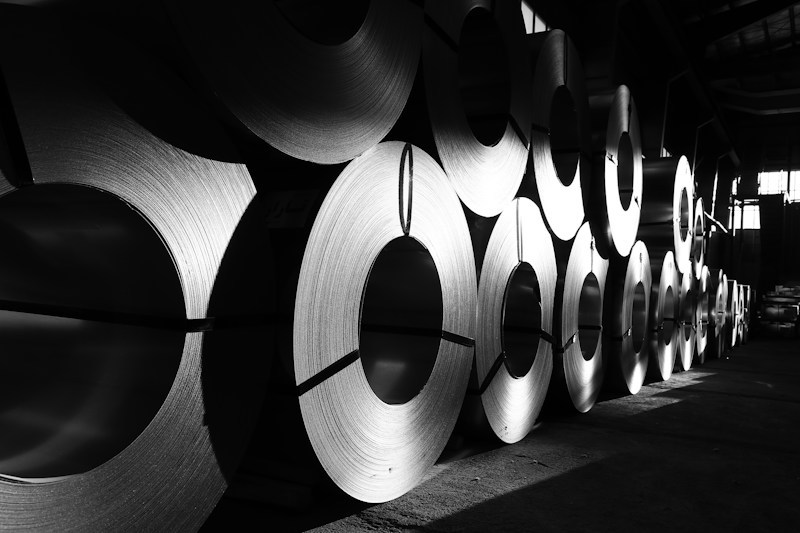
| Slivers and surface scratches | Coil-to-coil contact, guide marks, handling without interleaving | Require interleaved paper or film, eye-to-sky packing, and documented lift equipment |
| Orange peel after forming | Coarse grain structure from incorrect anneal | Fix the temper (H14, H32) and ask for grain size control in the mill certificate |
| Camber and coil set | Tension levelling or slitting alignment problems | Set camber tolerance to EN 485-4 or ASTM B209 and state it in the purchase order |
| Gauge variation across width | Insufficient crown and wedge control at the mill | Specify crown and wedge limits, not just nominal thickness |
| Water staining and white rust | Condensation inside the container during sea freight | Humidity-barrier wrap, desiccant, and VCI where the voyage crosses climate zones |
| Oil staining and residual rolling oil | Incomplete degreasing before packing | Specify degreased and anti-fingerprint surface where downstream painting or anodizing follows |
The single highest-return change most buyers can make is to stop accepting "as rolled" surface condition as a default. Stating edge condition, interleaving, and camber tolerance costs almost nothing at the mill and removes the majority of arrival disputes.
Reading an Aluminum Coil Quote Correctly
- Ask for the quote split into LME metal, regional premium, and conversion. A single blended number hides where the money goes and makes renegotiation impossible.
- Fix the pricing basis and validity window in writing. With backwardation in the market, a two-week validity can cost more than a two-dollar conversion difference.
- Match alloy to function, not to habit. 3003 handles most roofing and signage work at a lower cost than 5052, and 5052 is unnecessary where corrosion exposure is mild.
- Require a mill test certificate referencing EN 573-3 and ASTM B209, and check that the chemistry and mechanical values match the ordered temper.
- Confirm coil weight, inner diameter, and packing for your own decoiler before booking freight — a 5-tonne coil that your line cannot lift is a stored cost, not inventory.
MESCO Steel supplies aluminum coil and sheet in 1050, 3003, 5052, 5083, 6061 and 7075 across common tempers, with trimmed edges, interleaved packing, and mill test certificates issued with every shipment. Because we quote metal, premium, and conversion separately, buyers can see exactly what a change in alloy or coating specification does to landed cost before the order is placed.
Frequently Asked Questions
Why are aluminum coil prices so much higher in 2026?
Three factors compounded. The LME three-month benchmark averaged about USD 3,291 per tonne from January to October 2026, roughly 27% above the same period in 2025. LME stocks fell 26% year on year to about 349,574 tonnes, pushing the market into backwardation. And regional premiums rose sharply — the European duty-paid premium reached USD 559 per tonne in October, while the US Midwest premium moved above USD 1.00 per pound on top of a 50% import tariff.
What is the difference between the LME price and the price I pay?
The LME price covers only the primary metal. Your invoice also includes a regional physical premium (which reflects local supply, duty, and freight), a conversion charge for casting and rolling to your gauge and temper, and any alloying surcharge. In 2026 the premium component grew faster than the metal component in Europe and North America, which is why quotes diverged so widely between regions for identical specifications.
How do I stop aluminum coil from cracking at the edges during forming?
Edge cracking usually comes from a combination of slitting burr, inadequate edge quality, and a bend radius that is too tight for the temper ordered. Specify a trimmed edge, confirm the minimum bend radius for the specific temper with your supplier, and request edge-condition photographs or a sample before the full coil ships. Moving from H32 to O temper solves the problem too, but at a significant strength cost, so fix the edge first.
Should I buy 1050, 3003, or 5052 aluminum coil?
Choose by function. 1050 is the softest and most formable, suited to deep drawing and cookware. 3003 offers good corrosion resistance with moderate strength and covers most roofing, cladding, and signage at lower cost. 5052 delivers significantly higher strength and excellent marine corrosion resistance, which justifies its price only where structural strength or salt exposure demands it. Over-specifying alloy is one of the most common and most expensive purchasing habits in the category.
How should aluminum coils be packed for sea freight?
Use eye-to-sky or eye-to-wall orientation as agreed, wrap the coil in a humidity-barrier material, add desiccant inside the wrap, and apply VCI protection on long voyages that cross climate zones. Interleaved paper or film prevents coil-to-coil abrasion. Without these measures, condensation during transit produces water staining and white rust that is difficult to prove as a supplier defect after arrival, which is why packing should be written into the purchase order rather than left to convention.
Aluminum coil cost in 2026 is a three-part equation: a metal price that has already risen about 27%, a regional premium that can add another 31%, and a defect bill you control almost entirely through specification. The buyers who came through this year well were not the ones who found the cheapest quote — they were the ones who split the quote into its components and wrote edge condition, camber tolerance, and packing into the order.
Browse our aluminum coil and sheet range for alloys from 1050 to 7075, read more steel and metal sourcing guides, or contact the MESCO Steel team for a component-level quotation with mill test certificates and export packing included.