Galvanized vs Aluminized vs ZAM Steel——GI vs AS vs ZAM — Coating Technologies, Performance, Applications & Selection
- Share
- publisher
- Yilia
- Issue Time
- Mar 6,2026
Summary
This guide provides a systematic comparison of three mainstream coated steel products, helping engineers, procurement professionals, and product developers make optimal material selection decisions.
5. Application Scenario Selection Guide
Based on the core requirements of different application scenarios -- heat resistance, corrosion resistance, cost, and processability -- each of the three materials has its own optimal domain:
| Application Scenario | Galvanized Steel (GI) | Aluminized Steel (AS) | ZAM Steel |
| Automotive Exhaust Pipes / Mufflers | Not suitable (poor heat resistance) | First choice | Alternative |
| Automotive Underbody Corrosion Protection | Mainstream choice | Alternative | Emerging first choice |
| Building Roofing & Wall Panels | Common | Alternative | High-durability first choice |
HVAC Ductwork | Traditional choice | Alternative (good conductivity) | Alternative |
Oven / Grill Liners | Not suitable | First choice | Not suitable |
Industrial Furnaces / High-Temp Equipment | Not suitable | Only viable choice | Not suitable |
Coastal / Salt-Spray Environments | Marginally suitable | Good | Best choice |
Agricultural / Livestock Buildings | Cost-effective choice | Alternative | Long-life first choice |
Solar Panel Mounting Structures | Alternative | Alternative (lightweight) | Recommended |
Food / Pharmaceutical Clean Environments | Common (pre-treated) | Common | Good |
5.1 Automotive Industry
The automotive sector is one of the most important application fields for all three coated steels, with dramatically different performance requirements across vehicle components:
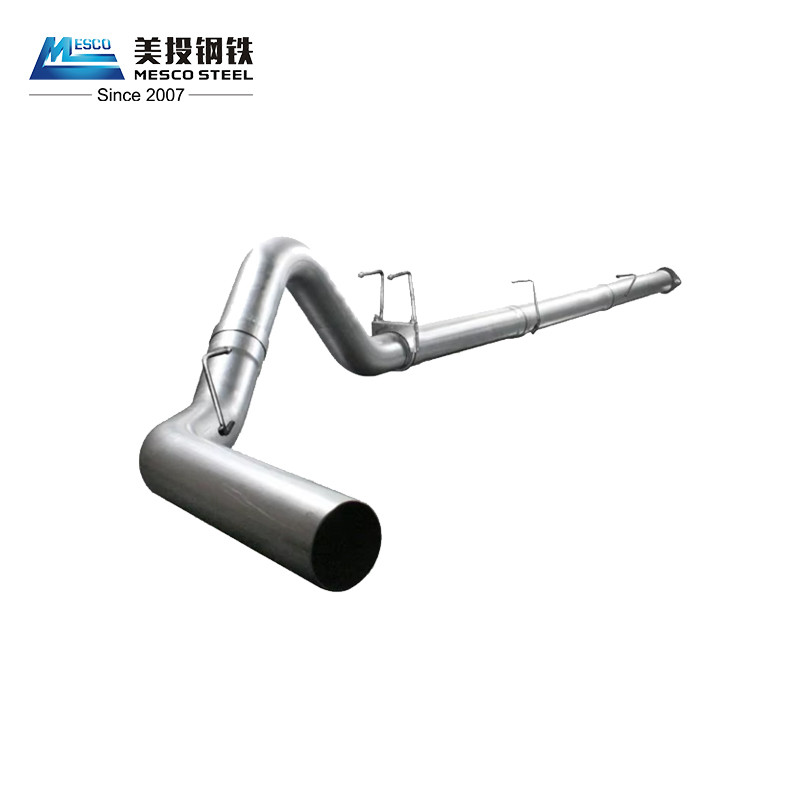
•Exhaust Systems (pipes, mufflers, heat shields): Aluminized steel (AS) is the only viable choice. It withstands the sustained high temperatures of the engine compartment and exhaust aftertreatment system.
•Underbody Anti-Corrosion Panels: Traditionally dominated by galvanized steel, but ZAM is rapidly gaining ground due to its superior cut-edge protection -- particularly in European markets.
•Outer Body Panels: Galvanized steel (electrogalvanized or hot-dip) remains mainstream, offering the best balance of formability, paintability, and cost.
5.2 Construction Industry
The construction sector places extremely high demands on long-term weathering resistance and overall economics:
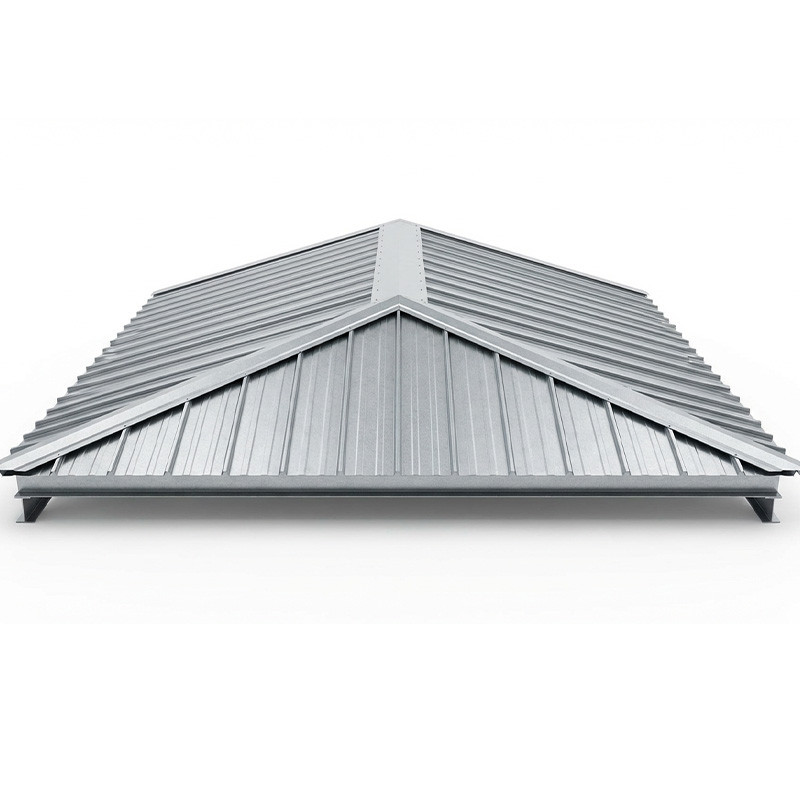
•Roofing & Cladding in Standard Inland Regions: Galvanized steel offers the best value. Z275 satisfies the requirements for most general-purpose applications.
•Coastal or High-Corrosion Environments: ZAM is the optimal choice. At equivalent coating weights, its service life significantly exceeds that of galvanized steel, resulting in a lower total cost of ownership.
•Solar Photovoltaic Mounting Structures: ZAM is rapidly becoming the industry standard for PV racking systems, thanks to its lighter coating weight and excellent weathering resistance.
5.3 Appliance Industry
The appliance industry imposes strict requirements on formability, paintability, and visual consistency:
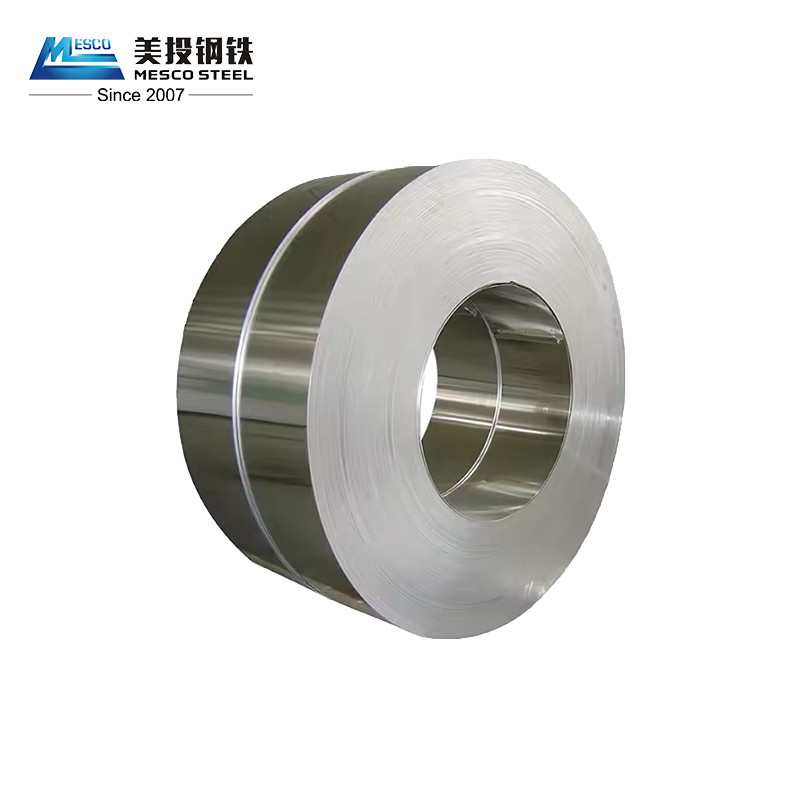
•Oven & Grill Liners: Aluminized steel (AS) is the preferred material due to its high thermal reflectivity and heat resistance, promoting more even food heating.
•Washing Machine Drums, Microwave Oven Housings: Galvanized steel (including pre-painted galvanized) is mainstream -- cost-effective with excellent formability.
•Refrigerator Cabinets, Outdoor Air Conditioner Units: ZAM is gradually displacing galvanized steel in these applications, thanks to its superior coating adhesion and weatherability.
6. International Standards & Common Specifications
| Standard Item | Galvanized Steel | Aluminized Steel | ZAM Steel |
| International Standards | ASTM A653 / EN 10346 | ASTM A463 / EN 10346 | JIS G 3317 / EN 10346 |
| Chinese Standard | GB/T 2518 | GB/T 14978 | GB/T 32968 |
| Common Grades (Coating Weight) | Z100 / Z275 / Z350 | AS80 / AS120 / AS150 /AS275 / AS300 | ZM70 / ZM100 / ZM200 |
Coating Weight Definition | Total both sides (g/m2) | Total both sides (g/m2) | Total both sides (g/m2) |
Approx. Coating Thickness | Z275: ~19 um/side | AS120: ~17 um/side | ZM100: ~7 um/side |
Important Note: Coating weight designations (e.g., Z275, AS120, ZM100) all refer to the total coating mass on both sides of the steel sheet, expressed in g/m2. When specifying material for procurement, the grade should be determined based on service environment, required service life, and budget. It is incorrect to compare anti-corrosion performance simply by comparing the coating weight numbers -- ZAM's ZM70 typically outperforms galvanized steel's Z275 in overall corrosion resistance despite the lower coating weight number.
7. Cost Analysis & Sustainability Considerations
7.1 Initial Cost Comparison
Based on indicative market prices (hot-rolled substrate as benchmark, 1.0 mm thickness):
•Galvanized Steel (Z275): Baseline price (index = 100%)
•Aluminized Steel (AS80): Approximately 110-125% of baseline
ZAM (ZM100): Approximately 120-140% of baseline
7.2 Sustainability & Environmental Considerations
•Recyclability: All three materials are 100% recyclable. Steel is one of the most recycled materials in the world.
•Coating Weight & Resource Efficiency: Because of its higher corrosion-protection efficiency, ZAM achieves equivalent service life with a lower coating mass (ZM70 vs. Z275), meaning less zinc consumption per unit of protection delivered.
•Zinc Resource Conservation: Global zinc reserves are finite. The wider adoption of ZAM and aluminized steel helps reduce dependence on heavy-coating galvanized steel, aligning with resource conservation objectives.
•Restricted Substances: All three materials are free from chromate and other restricted hazardous substances under modern passivation processes, and comply with the RoHS Directive.
8. Material Selection Decision Framework
When faced with a specific selection requirement, the following logic enables rapid decision-making:
| Decision Condition | Recommended Choice & Rationale |
| Continuous service temp. > 300 degrees C | Aluminized Steel (AS) -- the only viable choice. Heat resistance far exceeds the other two. |
| Service temp. 150-300 degrees C | Prefer Aluminized Steel (AS) or a high-temperature-grade ZAM product. |
| Ambient temp.; harsh corrosion environment (coastal, industrial) | ZAM is first choice -- cut-edge self-healing and extended service life. |
Ambient temp.; mild corrosion, cost-sensitive application | Galvanized Steel (GI) -- best value for money. |
Excellent formability required + long service life | ZAM -- outstanding formability combined with superior corrosion resistance. |
High thermal reflectivity required (thermal insulation role) | Aluminized Steel (AS) -- aluminum surface reflectivity approximately 80%. |
Lowest life-cycle cost in a corrosive environment | ZAM -- higher unit price, but significantly lower maintenance and replacement costs. |
Standard structural building components, indoor or low-corrosion | Galvanized Steel (GI) -- proven, reliable, and simple to process. |
9. Conclusion
Galvanized, aluminized, and ZAM coated steels each have clearly defined performance strengths and optimal application scenarios. They are not simply interchangeable substitutes -- they are complementary materials that coexist within the market:
•Galvanized Steel (GI) will continue to dominate large-volume, general-purpose markets for the foreseeable future, owing to its lowest cost and the maturity of its process ecosystem.
•Aluminized Steel (AS) is irreplaceable in high-temperature applications. As the core material for automotive exhaust systems and industrial hot-end equipment, it faces no competitive challenger in the near term.
•ZAM Steel represents the future direction of coating technology -- delivering superior comprehensive corrosion protection with thinner coatings. It will continue to expand rapidly in construction, automotive chassis, and photovoltaic mounting structure applications.
For materials engineers and procurement decision-makers, the optimal solution is not to search for a single universal material, but to scientifically match the most appropriate coating type and specification to the specific application -- based on operating temperature, corrosion environment, processing requirements, budget, and required service life -- achieving the best possible balance between performance and cost.
This document is for reference purposes only. For specific material selection decisions, please consult a qualified materials engineer in conjunction with your actual service conditions.
Galvanized Steel (GI)
Aluminized Steel (AS)
Aluminized Steel Pipe