Hot Rolled Steel 2026: Market Outlook, Price Forecast, and Quality Standards
- Share
- publisher
- MESCO Steel
- Issue Time
- Sep 7,2026
Summary
In-depth analysis of hot rolled steel market in 2026, covering price trends and forecast, key applications, quality standards, global supply chain, and strategic procurement insights for B2B buyers.
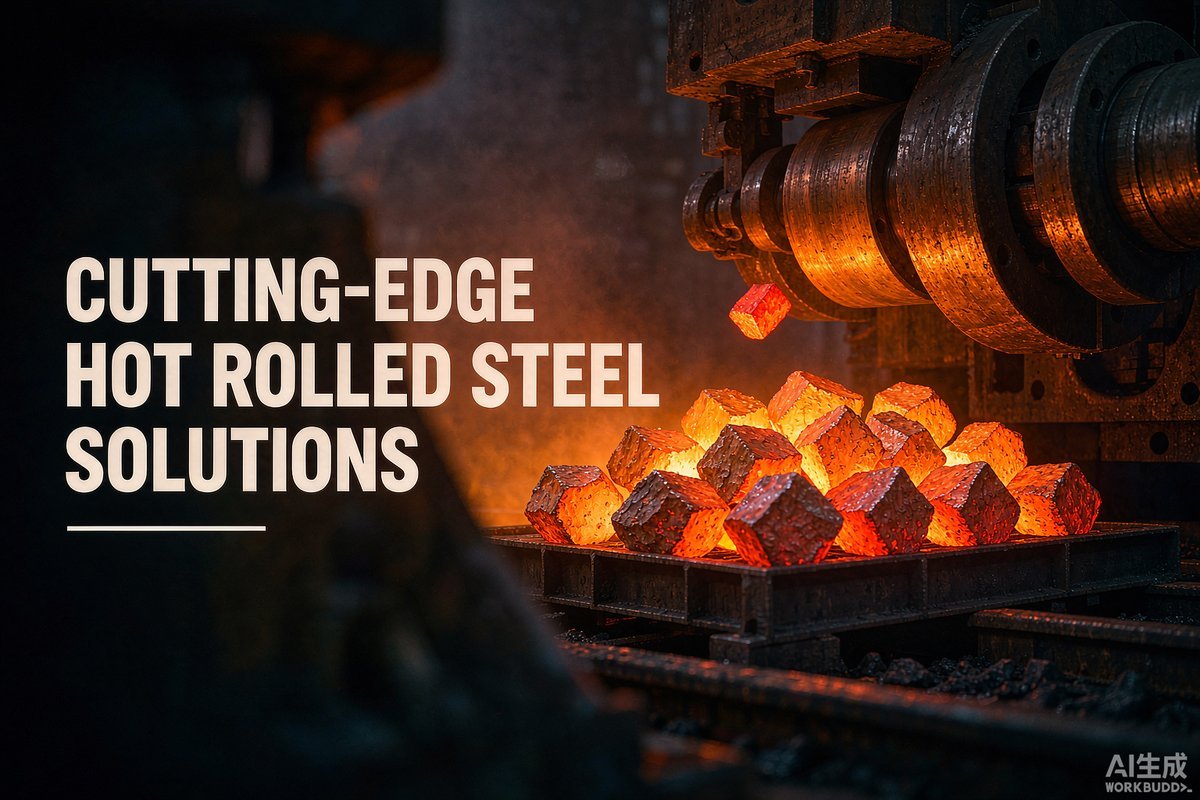
Hot rolled steel (HRC) is the backbone of the global steel industry, serving as the primary raw material for countless downstream products. In 2026, the hot rolled steel market faces a complex landscape of price volatility, capacity expansion, and shifting trade flows. This article provides a comprehensive analysis of hot rolled steel price trends, market outlook, quality standards, and strategic procurement insights for B2B buyers worldwide.
Whether you are sourcing hot rolled steel coils for construction, automotive, or energy applications, understanding the 2026 market dynamics is essential for making informed purchasing decisions.
Hot Rolled Steel Market Overview 2026
The global hot rolled steel market in 2026 is navigating a period of price correction and demand recalibration. According to SMM (Shanghai Metals Market) forecasts, HRC prices are expected to oscillate in a low-to-moderate range through 2026, driven by the following factors:
- Cost-push dynamics — Rising iron ore and coking coal costs are providing a floor for HRC prices, with a modest rebound anticipated in late 2026.
- Coil-rebar spread widening — The price gap between hot rolled coil and rebar has expanded, reflecting stronger demand from the manufacturing sector relative to real estate construction.
- Export demand strength — Chinese hot rolled steel exports remain robust, driven by competitive pricing and strong demand from Southeast Asia, the Middle East, and Africa.
- Capacity expansion — Approximately 40 million tons of new HRC capacity is under construction in China, which could pressure prices once operational.

Hot Rolled Steel Price Trends and Forecast 2026
Price forecasting for hot rolled steel requires a multi-factor analysis. Below is a summary of the key price drivers and their expected impact for the remainder of 2026:
| Price Driver | Current Trend | Expected Impact (H2 2026) |
|---|---|---|
| Iron Ore Prices | Stable at $100–110/ton | Moderate upward pressure on HRC |
| Chinese Capacity Utilization | ~75% (below peak) | Supply remains ample, capping upside |
| Global Manufacturing PMI | Recovering, above 50 | Gradual demand improvement |
| EU CBAM Tariffs | Phasing in from 2026 | Regional price divergence, premium for low-carbon HRC |
| Export Demand (China) | Strong, +12% YoY | Sustained export volumes to developing markets |
| Inventory Levels | Moderate-high | Gradual destocking through Q4 |
Procurement Insight: With HRC prices expected to remain range-bound through Q3 2026, buyers are advised to secure long-term contracts at current levels rather than speculating on significant price drops. The modest rebound anticipated in Q4 makes forward purchasing a prudent strategy.
Key Applications of Hot Rolled Steel
Hot rolled steel's versatility and cost-effectiveness make it the material of choice across a wide range of industries:
Construction and Structural Engineering
Hot rolled steel beams, columns, and channels form the structural skeleton of buildings, bridges, and industrial facilities. Its excellent weldability and strength-to-weight ratio make it ideal for heavy structural applications. In 2026, infrastructure spending in Southeast Asia and the Middle East is driving strong demand for structural-grade HRC.
Pipe and Tube Manufacturing
Hot rolled steel coils are the primary feedstock for ERW (electric resistance welded) pipes, spiral welded pipes, and seamless tube production. The oil and gas sector, water infrastructure projects, and structural piping applications consume significant volumes of HRC-based pipe products.
Automotive and Transportation
While cold rolled steel dominates automotive body panels, hot rolled steel is used extensively for chassis components, wheel rims, truck frames, and heavy vehicle structural parts. The commercial vehicle segment remains a strong consumer of HRC grades.
Shipbuilding and Heavy Machinery
Ship hull plates, crane booms, excavator arms, and mining equipment rely on hot rolled steel plates for their combination of strength, toughness, and weldability. The global shipbuilding order book remains healthy in 2026, supporting steady HRC demand.
Hot Rolled Steel Grades and Quality Standards
Selecting the correct grade of hot rolled steel is critical for project success. Below is a reference table of common international standards:
| Standard | Common Grades | Typical Applications |
|---|---|---|
| ASTM A36 | A36 | Structural steel for buildings and bridges |
| ASTM A572 | Grade 50, Grade 60, Grade 65 | High-strength low-alloy structural applications |
| EN 10025 | S235JR, S275JR, S355JR, S355J2 | European standard structural steel |
| JIS G3101 | SS400, SM400, SM490 | General structural steel (Asia-Pacific market) |
| GB/T 1591 | Q235B, Q355B, Q390B | Chinese standard low-alloy structural steel |
| SAE 1006–1010 | SAE 1006, 1008, 1010 | Drawing and forming grades for automotive |
Global Supply Chain and Trade Outlook
The hot rolled steel supply chain in 2026 is undergoing significant transformation:
- China's export dominance — China remains the world's largest HRC exporter, but export tax adjustments and CBAM compliance costs are reshaping trade flows toward non-EU markets.
- India's rise as a producer — India's hot rolling capacity is expanding rapidly, with new mills targeting Middle Eastern and African markets.
- Green steel premium — Low-carbon hot rolled steel produced via EAF (electric arc furnace) with renewable energy is commanding a 10–20% premium in European markets, a trend expected to accelerate.
- Logistics normalization — Ocean freight rates have stabilized in 2026, but geopolitical risks in key shipping lanes (Red Sea, South China Sea) remain a watch point for supply chain continuity.
Frequently Asked Questions
What is the difference between hot rolled and cold rolled steel?
Hot rolled steel is processed at temperatures above 925°C, allowing it to be shaped more easily but resulting in a rougher surface with mill scale. Cold rolled steel is further processed at room temperature for a smoother finish, tighter tolerances, and higher strength, but at a higher cost.
What thicknesses are available in hot rolled steel?
Hot rolled steel coils typically range from 1.2 mm to 25 mm in thickness. Hot rolled plates can go up to 200 mm or more. Common coil thicknesses include 1.5 mm, 2.0 mm, 2.5 mm, 3.0 mm, 4.0 mm, 5.0 mm, 6.0 mm, 8.0 mm, and 10.0 mm.
How do I choose the right hot rolled steel grade for my project?
For general structural applications, S235JR (EN) or A36 (ASTM) is sufficient. For higher strength requirements, choose S355JR or A572 Grade 50. For forming and drawing applications, specify SAE 1006–1010 grades. Always consult with your supplier about the specific mechanical property requirements of your project.
What is the price forecast for hot rolled steel in 2026?
Market analysts predict HRC prices will remain in a low-to-moderate range for most of 2026, with a potential modest rebound in Q4 driven by cost-push factors and seasonal demand pickup. The SMM forecast suggests Chinese HRC prices will trade in the 3,100–3,400 RMB/ton range through year-end.
Can hot rolled steel be used for outdoor applications?
Yes, but hot rolled steel requires surface protection for outdoor use. Common options include hot-dip galvanizing, painting, or epoxy coating. Weathering steel grades (e.g., Corten) are also available for architectural applications where a patina finish is desired.
Hot rolled steel remains an essential industrial commodity in 2026, with demand driven by infrastructure development, manufacturing expansion, and energy sector investment. While price volatility persists, the market outlook is one of cautious stability. For B2B buyers, the key to successful procurement lies in understanding grade specifications, monitoring trade policy developments, and building strong relationships with reliable suppliers.
For current pricing and availability of hot rolled steel coils and plates, contact the MESCO Group team for a competitive quotation tailored to your project requirements.