Refurbished & Used Continuous Casting Machine (CCM) — Billet, Bloom & Slab
Review
Description
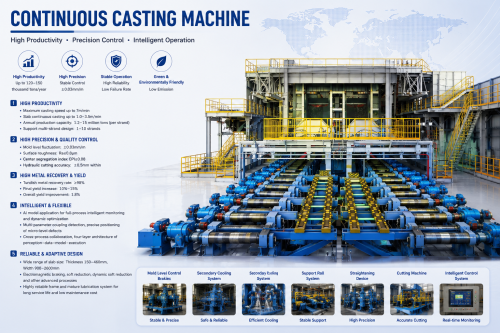
A brand-new continuous casting machine can take 12–18 months from order to production. Meanwhile, market opportunities slip away and capital sits frozen. Our refurbished and used continuous casting machines deliver identical production capability at 40–60% of the cost — with deployment timelines measured in months, not years. You need more casting capacity. But the traditional path creates more problems than it solves. New CCM procurement from major OEMs requires 12–18 months. Every month of waiting is lost production and lost revenue. New casting lines demand multimillion-dollar investment that strains balance sheets and delays project ROI by years. Running outdated casters increases downtime, quality issues, and maintenance costs — eroding your competitive position. When demand spikes, the producers who can scale fastest capture the margin. Slow capacity expansion means leaving money on the table. Professional inspection and precision refurbishment deliver new-machine performance at a fraction of the cost Achieve continuous casting capability with dramatically reduced equipment investment. Lower purchase cost translates directly to faster project payback and improved ROI. Shorter installation cycle and faster commissioning compared to 12–18 months for new equipment. Earlier production start means earlier revenue generation. Every machine has actual production history and mature mechanical design. Our refurbishment process verifies and restores performance before delivery. Equipment can be modified for different steel grades, casting sections, and production capacities. One solution serves multiple product requirements. Proven technology reduces commissioning uncertainty. Mature equipment structures mean existing spare parts availability and experienced maintenance solutions. PLC system replacement, HMI interface upgrades, Level 2 automation integration, and online monitoring for modern process control capabilities. A systematic four-stage approach ensures every machine meets production-ready standards Comprehensive inspection across all major systems: mechanical (frame, rollers, withdrawal units, cutting equipment, hydraulics), casting (mold assembly, oscillation, secondary cooling, roll alignment), and electrical (PLC, drives, sensors, instrumentation, control cabinets). Precision refurbishment includes replacement of worn components, roll alignment adjustment, hydraulic system maintenance, structural reinforcement, mold oscillation optimization, secondary cooling improvement, and spray system renewal. Optional modernization: PLC system replacement, HMI interface upgrade, Level 2 automation integration with digital process monitoring, online quality inspection, temperature monitoring, and casting parameter optimization. Complete verification including mechanical operation testing, control system validation, casting simulation, and trial production. Delivers stable operation, reliable casting performance, and reduced installation risks. For carbon steel, construction steel, and bar/wire rod billets. Suitable for integrated mills, rolling enterprises, and foundries. For high-quality structural steel and alloy steel products. Suitable for special steel producers and capacity expansion projects. For stainless steel slabs and high-strength steel. Suitable for integrated steel mills and specialty flat-product producers. Custom-configured for specialty alloys with tailored cooling, mold, and automation parameters. For demanding metallurgical requirements. Lower purchase cost combined with rapid installation and earlier production operation dramatically improves overall project economics. Investment typically yields strong returns within a compressed payback period. Equipment value is easier to evaluate with proven market demand and strong secondary market liquidity. Flexible future upgrading and easier equipment relocation reduce long-term asset risk. Refurbishing existing industrial equipment extends lifecycle, reduces resource consumption, and supports sustainable steel production practices aligned with modern environmental priorities. Perfect for steel mills entering new markets, existing plants expanding capacity, and companies upgrading from older casting technologies without the burden of full new-equipment investment. Through our systematic four-stage process (assessment, refurbishment, upgrade, verification), each machine is restored to production-ready standards. Worn components are replaced, roll alignment is adjusted, and casting performance is verified through simulation and trial production. Many machines are "as-new" with low operating hours and complete technical documentation. From equipment confirmation to production handover typically takes 3–5 months, depending on machine configuration and required modifications. This compares to 12–18 months for new equipment procurement from major OEMs. Yes. Equipment can be modified for different steel grades (carbon, stainless, alloy, high-strength), casting sections, and production capacities. We work with your technical team to match machine specifications to your exact production requirements. We offer PLC system replacement, HMI interface upgrades, Level 2 automation integration, digital process monitoring, online quality inspection, and production data management. Systems can be configured from basic PLC control to fully integrated digital solutions. Service scope includes engineering design review, on-site installation supervision, commissioning support, operator training, and ongoing remote diagnostics. We also provide spare parts sourcing and maintenance solution consulting. Contact our team with your requirements (billet/bloom/slab, steel grades, desired capacity, budget range). We maintain an updated inventory of available machines and can match you with the right equipment within 48 hours. Tell us your requirements — steel grade, casting section, and target capacity — and receive a tailored equipment proposal within 8 hours. Free technical consultation • 8-hour response • Current inventory availableWhy Wait 18 Months? Start Casting in 3–5 Months with Refurbished CCM
The Capacity Challenge Steel Producers Face
18-Month Lead Times
Massive Capital Outlay
Aging Equipment Risk
Missed Market Windows
The Refurbished CCM Advantage
40–60% Lower Capital Expenditure
3–5 Month Deployment
Verified Production Performance
Flexible Production Adaptation
Lower Operational Risk
Automation Upgrades Available
Professional Refurbishment Process
Complete Equipment Assessment
Systematic Refurbishment
Automation & Control Upgrade
Testing & Verification
Machine Types & Applications
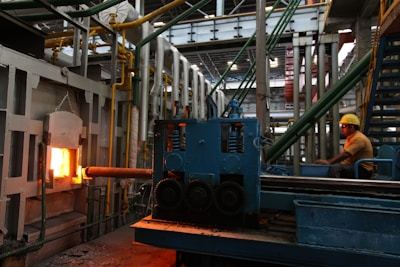
Billet Continuous Casting Machine
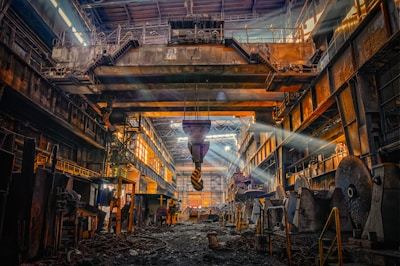
Bloom Continuous Casting Machine
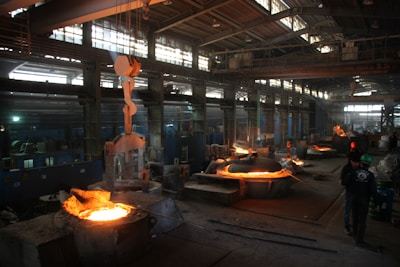
Slab Continuous Casting Machine
Special Steel CCM
Economic & Strategic Benefits
Faster Return on Investment
Lower Asset Depreciation Risk
Sustainable Equipment Utilization
Ideal for Industry Upgrades
Frequently Asked Questions
How does refurbished CCM quality compare to new equipment?
What is the typical delivery timeline?
Can the equipment be adapted to my specific steel grades?
What automation and control options are available?
What technical support is included?
How do I check current machine availability?
Ready to Expand Your Casting Capacity?