Silicon Steel 2026: Complete Guide to Electrical Steel Types, Grades, and Market Trends
- Share
- publisher
- MESCO Steel
- Issue Time
- Oct 12,2026
Summary
Complete guide to silicon steel (electrical steel) in 2026: types, grades, manufacturing, applications, and market trends for B2B buyers of transformer and NEV motor steel.
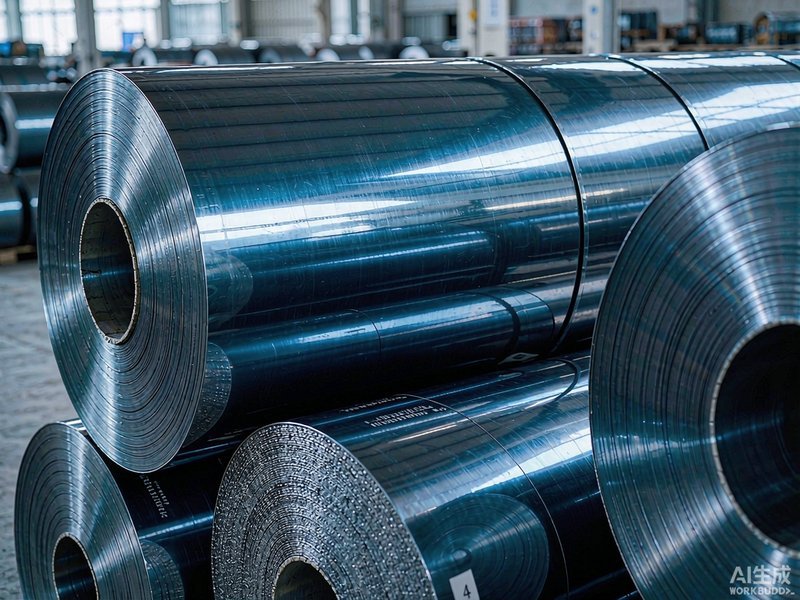
Silicon steel, also known as electrical steel, is a specialized ferromagnetic alloy containing 1% to 6.5% silicon that plays an indispensable role in modern electrical infrastructure. As the backbone of transformers, electric motors, generators, and inductors, silicon steel directly impacts energy efficiency across power generation, transmission, and consumption systems worldwide.
This comprehensive guide explores silicon steel properties, grades (grain-oriented vs. non-oriented), manufacturing processes, market trends, and buying strategies for 2026 — providing B2B buyers with actionable insights for informed procurement decisions.
What Is Silicon Steel? Properties and Types
Silicon steel is produced by adding silicon to low-carbon steel during the melting process. The addition of silicon significantly increases electrical resistivity, reduces hysteresis losses, and improves magnetic permeability — making it the preferred core material for electromagnetic devices.
Key Physical Properties
| Property | Typical Value (GOES) | Typical Value (NOES) | Benefit |
|---|---|---|---|
| Silicon Content | 2.9–3.3% | 1.0–3.2% | Increases resistivity |
| Core Loss (W/kg at 1.7T, 50Hz) | 0.85–1.10 | 2.0–4.0 | Lower = higher efficiency |
| Magnetic Flux Density (Tesla) | 1.92–2.03 | 1.60–1.75 | Higher = smaller core size |
| Electrical Resistivity (µΩ·cm) | 45–55 | 25–45 | Reduces eddy current losses |
| Density (g/cm³) | 7.65 | 7.75–7.85 | Lighter core weight |
| Lamination Thickness (mm) | 0.23–0.35 | 0.35–0.65 | Thinner = lower eddy loss |
Grain-Oriented Silicon Steel (GOES) vs. Non-Oriented Silicon Steel (NOES)
Understanding the difference between GOES and NOES is critical for selecting the right material for your application:
| Characteristic | Grain-Oriented (GOES) | Non-Oriented (NOES) |
|---|---|---|
| Grain Structure | Highly aligned (Goss texture) | Random orientation |
| Magnetic Direction | Optimal in rolling direction | Isotropic (all directions) |
| Core Loss | Very low (0.85–1.10 W/kg) | Moderate (2.0–4.0 W/kg) |
| Primary Applications | Power transformers, distribution transformers | Electric motors, generators, small transformers |
| Cost | Higher | Lower |
| Market Share | ~30% of electrical steel market | ~70% of electrical steel market |
Silicon Steel Manufacturing Process
The production of silicon steel involves several precise stages that determine the final magnetic properties:
- Steelmaking — High-purity iron ore is melted with silicon, carbon, manganese, and aluminum in a basic oxygen furnace (BOF) or electric arc furnace (EAF).
- Continuous Casting — Molten steel is cast into slabs with controlled cooling to prevent grain structure defects.
- Hot Rolling — Slabs are reheated and rolled thin at temperatures above 1,100°C, followed by pickling in acid to remove scale.
- Cold Rolling — For GOES, multiple cold rolling passes with intermediate annealing are required. NOES typically undergoes one or two cold rolling stages.
- Decarburization Annealing — Carbon content is reduced to below 0.003% to minimize magnetic aging.
- High-Temperature Annealing — GOES receives final box annealing at 1,100–1,200°C to develop the Goss texture. NOES receives continuous annealing.
- Insulation Coating — A thin organic or inorganic coating is applied to each lamination to prevent eddy currents between adjacent layers.
Global Silicon Steel Market Trends 2026
The global silicon steel market in 2026 is experiencing significant transformation driven by energy efficiency regulations, electrification trends, and supply chain dynamics:
Market Size and Growth
- The global electrical steel market was valued at approximately USD 35.8 billion in 2025 and is projected to reach USD 52.4 billion by 2032, growing at a CAGR of 5.6%.
- Asia-Pacific dominates with over 65% of global production, led by China (Baowu, Shougang, Wisco), Japan (Nippon Steel, JFE), and South Korea (POSCO).
- Grain-oriented silicon steel (GOES) demand is growing at 4.2% annually, driven by transformer replacement cycles and renewable energy grid integration.
- Non-oriented silicon steel (NOES) demand is growing at 6.5% annually, fueled by electric vehicle (EV) motor production and industrial automation.
Key Market Drivers
- Energy efficiency regulations — New minimum efficiency standards for transformers (EU Ecodesign, US DOE 2025+) are pushing utilities to upgrade to high-grade GOES cores.
- Electric vehicle boom — Each EV contains 40–80 kg of NOES in its traction motor, with global EV production expected to exceed 30 million units by 2027.
- Renewable energy expansion — Wind turbines, solar inverters, and battery storage systems all require silicon steel cores for power conversion and grid connection.
- Grid modernization — Aging transformer infrastructure in developed economies and new grid buildout in emerging markets are driving sustained GOES demand.
- Supply chain restructuring — Trade restrictions and self-sufficiency policies in the US, EU, and India are reshaping global silicon steel trade flows.
Price Trends and Forecast
| Grade | Q1 2026 (USD/ton) | Q2 2026 (USD/ton) | Q3 2026 Forecast | Trend |
|---|---|---|---|---|
| GOES Hi-B (0.23mm) | $2,850–3,200 | $2,950–3,350 | $3,000–3,400 | Rising |
| GOES Standard (0.30mm) | $2,200–2,600 | $2,300–2,700 | $2,350–2,750 | Rising |
| NOES High Grade (M470–800) | $1,500–1,800 | $1,550–1,850 | $1,600–1,900 | Slight Rise |
| NOES Standard (M1000+) | $1,100–1,400 | $1,100–1,450 | $1,150–1,500 | Stable |
Quality Standards and Grades
When sourcing silicon steel, buyers should specify the applicable international standard and grade designation:
| Standard | Region | GOES Grades | NOES Grades |
|---|---|---|---|
| EN 10106 / 10107 | Europe | M090-27P to M130-30S | M235-35A to M800-65A |
| JIS C2553 / C2552 | Japan | 23G085 to 30G130 | 35H230 to 50H1000 |
| ASTM A876 / A677 | USA | M3–M6 | 36F145 to 64F500 |
| GB/T 2521 / 2522 | China | 23QG085 to 30QG120 | 35W230 to 50W1300 |
Sourcing Tip: Grade designations encode core loss values. For example, M090-27P means maximum core loss of 0.90 W/kg at 1.7T/50Hz for 0.27mm thickness. Always verify that the specified grade matches your transformer efficiency requirements.
Buying Guide for Silicon Steel in 2026
Key Selection Criteria
- Core Loss Requirements — Determine the maximum acceptable core loss (W/kg) at your operating frequency and flux density. Higher-efficiency transformers require lower core loss grades (e.g., M090-27P for premium transformers).
- Thickness Selection — Thinner laminations (0.23–0.27mm) reduce eddy current losses but increase manufacturing cost. Standard transformers often use 0.30–0.35mm GOES.
- Coating Type — C-2 (inorganic) for high-temperature stress relief annealing; C-5 (semi-organic) for most power transformers; C-0 (organic) for small cores.
- Quantity and Lead Time — Silicon steel typically requires 6–12 weeks lead time. Premium grades may have longer lead times due to limited production capacity.
- Verification and Testing — Request Epstein frame test certificates confirming core loss, magnetic flux density, and lamination factor for each batch.
Top Silicon Steel Producing Countries (2026)
- China — World's largest producer (Baowu, Shougang, Ansteel, Tisco) with ~60% of global production capacity.
- Japan — Leading producer of premium Hi-B GOES (Nippon Steel, JFE Steel)
- South Korea — POSCO is a top global supplier of both GOES and NOES
- Germany/EU — ThyssenKrupp, ArcelorMittal produce specialized grades for European OEMs
- USA — AK Steel (Cleveland-Cliffs), Nucor supply domestic transformer and motor markets
- India — Rapidly expanding capacity (SAIL, Tata Steel) targeting self-sufficiency by 2028
Frequently Asked Questions
What is the difference between GOES and NOES silicon steel?
Grain-oriented silicon steel (GOES) has its crystal grains aligned in the rolling direction, providing superior magnetic properties in one direction — ideal for transformer cores where magnetic flux flows along a single path. Non-oriented silicon steel (NOES) has randomly oriented grains, offering isotropic magnetic properties suitable for rotating machines like motors and generators where flux direction changes constantly.
How does silicon content affect steel properties?
Higher silicon content increases electrical resistivity and reduces core losses, but also makes the steel harder and more brittle. Typical electrical steels contain 1.0% to 6.5% silicon. Grades above 3% silicon offer significantly improved efficiency but require more careful handling during shearing and stamping to avoid edge cracking.
What is driving silicon steel price increases in 2026?
Silicon steel prices have risen in 2026 due to: (1) strong demand from EV motor and transformer manufacturers, (2) limited capacity expansion for premium Hi-B GOES grades, (3) rising raw material costs (silicon metal, electrical-grade iron ore), and (4) trade measures including anti-dumping duties in the US, EU, and India affecting global trade flows.
Can silicon steel be recycled?
Yes, silicon steel is fully recyclable. Scrap from electrical steel laminations and end-of-life transformers is collected and remelted to produce new steel. Recycling silicon steel requires careful sorting to maintain consistent silicon levels, as silicon content must be precisely controlled for magnetic-grade applications.
How do I choose the right electrical steel for an electric motor?
For EV and industrial motors, select NOES grades with low core loss (M470-65A or better) and high magnetic polarization (J2000 > 1.60T). Thickness of 0.35mm for high-speed motors and 0.50mm for general industrial motors offers the best balance of efficiency and cost. Specify the coating type based on whether stress relief annealing will be performed after stamping.
Silicon steel remains a critical material for the global energy transition in 2026. With accelerating demand from EV production, transformer grid upgrades, and renewable energy deployment, B2B buyers must navigate a market characterized by tight supply for premium grades, rising prices, and increasingly stringent efficiency standards.
For more information on silicon steel products and current pricing, contact the MESCO Group team for a tailored quotation covering GOES and NOES grades from leading global mills.