Steel Tube 2026: Complete Guide to Types, Manufacturing Standards, and Buying Tips
- Share
- publisher
- MESCO Steel
- Issue Time
- Oct 12,2026
Summary
Complete guide to steel tube in 2026: seamless, ERW, LSAW, and SSAW types, manufacturing standards, and market analysis with practical buying tips for steel pipe procurement.
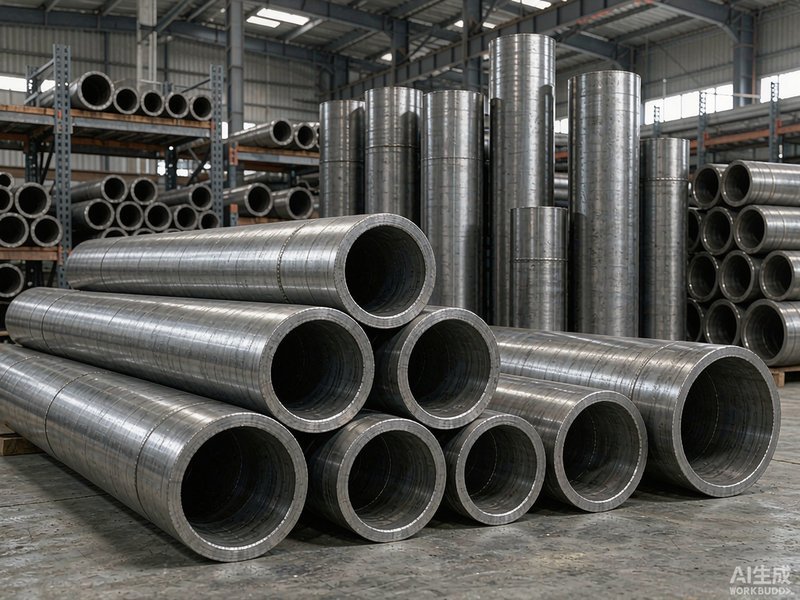
Steel tubes are among the most versatile and widely used steel products in modern industry, serving critical roles in construction, energy transportation, automotive manufacturing, and mechanical engineering. In 2026, the global steel tube market continues to evolve rapidly, shaped by infrastructure investment, energy security concerns, and technological advancements in manufacturing processes.
This comprehensive guide covers steel tube types (seamless vs. welded), manufacturing methods, material grades, quality standards, market trends, and practical buying advice for B2B procurement professionals in 2026.
Types of Steel Tube: Seamless vs. Welded
Steel tubes are broadly classified by their manufacturing method into seamless tubes and welded tubes, each with distinct characteristics, advantages, and optimal applications.
| Property | Seamless Steel Tube | Welded Steel Tube (ERW) | Welded Steel Tube (LSAW/SSAW) |
|---|---|---|---|
| Manufacturing Process | Rotary piercing and elongation of solid billet | Cold forming from coil and high-frequency welding | Bending steel plate and submerged arc welding |
| Wall Thickness Range | 0.5–100 mm | 0.5–25.4 mm | 6–60 mm |
| Outer Diameter Range | 6–660 mm (hot-rolled); 1–200 mm (cold-drawn) | 12.7–660 mm | 406–3,000 mm |
| Pressure Rating | Excellent — no weld seam weakness | Good — weld zone is heat-affected | Very good — suitable for high-pressure |
| Cost | Highest | Lowest | Moderate |
| Typical Applications | Boiler tubes, hydraulic systems, oil & gas downhole | Structural, automotive, furniture, water pipes | Oil & gas pipelines, structural piles |
Seamless Steel Pipe Manufacturing
Seamless tubes are produced by heating a solid cylindrical billet to approximately 1,200°C and then piercing it to create a hollow shell. The shell is elongated through a mandrel mill (for smaller diameters) or a plug mill. Cold drawing or cold rolling further reduces the diameter and wall thickness while improving surface finish and dimensional precision.
Welded Steel Pipe Manufacturing
Welded tubes start as steel strip or plate that is cold-formed into a cylindrical shape. The seam is welded using one of three main methods:
- ERW (Electric Resistance Welding) — High-frequency current passes through the strip edges, heating them to welding temperature. The molten edges are forged together by squeeze rolls. Most common for diameters up to 660 mm.
- LSAW (Longitudinal Submerged Arc Welding) — Steel plate is formed into a tube and welded along one or two longitudinal seams using submerged arc welding. Used for large-diameter pipes (406–3,000 mm).
- SSAW (Spiral Submerged Arc Welding) — A continuous spiral weld seam is created as the steel strip is helically formed. Ideal for large-diameter pipes from a narrower strip width.
Global Steel Tube Market Trends 2026
The global steel tube market is experiencing robust growth in 2026, driven by infrastructure investment, energy sector expansion, and industrial recovery:
Market Size and Growth Projections
- The global steel pipe and tube market was valued at approximately USD 185 billion in 2025, with a projected CAGR of 4.2% through 2032.
- Asia-Pacific accounts for approximately 60% of global steel tube production, with China producing over 90 million tons annually.
- Seamless tube demand is growing at 3.8% CAGR, supported by oil & gas drilling activity and power plant construction.
- Welded tube demand is growing at 4.5% CAGR, driven by construction, infrastructure, and automotive sectors.
Key Market Drivers
- Global infrastructure stimulus — Major economies are investing heavily in transportation, water management, and energy infrastructure, directly boosting steel tube demand.
- Oil & gas sector recovery — Sustained oil prices above $75/barrel are driving new drilling activity and pipeline projects in the Middle East, North America, and Africa.
- Energy transition infrastructure — Hydrogen transport pipelines, geothermal well casings, and carbon capture pipelines represent new demand segments for premium seamless tubes.
- Urbanization in emerging markets — Rapid urbanization in Southeast Asia, India, and Africa is fueling demand for structural steel tubes in building construction.
- Trade protection measures — Anti-dumping duties (US Section 232, EU safeguard measures) are reshaping global trade flows, with Asian exporters redirecting volumes.
Steel Tube Price Trends (2026)
| Product Type | Q1 2026 (USD/ton) | Q2 2026 (USD/ton) | Outlook |
|---|---|---|---|
| Seamless Carbon Steel Pipe (API 5L Gr.B) | $1,150–1,400 | $1,200–1,450 | Stable-to-rising |
| Seamless Alloy Steel Pipe (P11/P22) | $2,200–2,800 | $2,300–2,900 | Rising |
| ERW Steel Pipe (structural grade) | $820–1,050 | $850–1,100 | Slight rise |
| LSAW Large Diameter Pipe | $1,100–1,450 | $1,150–1,500 | Rising |
| Stainless Steel Seamless Pipe (304) | $3,800–4,500 | $4,000–4,800 | Rising (nickel cost driven) |
Quality Standards and Specifications
Steel tubes must comply with stringent international standards. Understanding these specifications is essential for B2B buyers to ensure product suitability:
| Standard | Scope | Common Grades | Typical Application |
|---|---|---|---|
| API 5L | Line pipe (oil & gas) | Gr.B, X42, X52, X60, X65, X70, X80 | Oil & gas pipelines, transmission lines |
| ASTM A106 / A53 | Seamless carbon steel pipe | Gr.A, Gr.B, Gr.C | High-temperature service, general piping |
| EN 10216 / 10217 | European seamless/welded pressure pipe | P195GH, P235GH, P265GH, 16Mo3 | Pressure vessels, boilers |
| ASTM A312 | Stainless steel seamless/welded pipe | 304/304L, 316/316L, 321, 347 | Chemical processing, food industry |
| EN 10025 | Structural hollow sections | S235JRH, S355J2H, S460NH | Building structures, bridges |
| GB/T 8163 / 3091 | Chinese seamless/ welded pipe | 20#, Q235B, Q345B, 15CrMoG | General piping, structural |
Buying Tip: Always specify the full standard designation and grade when ordering. For example: "API 5L Gr.B PSL2, seamless, 6-inch Sch 40, bevelled ends" — each parameter affects price, lead time, and suitability for your specific application.
Steel Tube Buying Guide 2026
Key Considerations for Buyers
- Application Requirements — Determine operating pressure, temperature, and media (gas, liquid, corrosive environment). This dictates seamless vs. welded choice and material grade.
- Dimensional Specifications — Specify OD, wall thickness (schedule), length, and tolerances. Standard lengths are typically 6m or 12m for seamless, custom lengths for welded.
- End Finish — Plain, beveled (for welding), threaded, or coupled ends. Beveled ends are standard for pressure applications requiring field welding.
- Testing and Certification — Request mill test certificates (MTC) per EN 10204 3.1 or 3.2. Common NDT tests include hydrostatic, UT, X-ray, and PMI for alloy verification.
- Surface Protection — Specify coating (black/varnish for carbon steel, pickled & oiled, or galvanized) and packaging (metal caps, wooden crates, or bundles) for corrosion protection during transit.
Supply Chain and Sourcing Strategy
In 2026, the steel tube supply chain faces several challenges that buyers should account for in their procurement strategy:
- Lead times — Standard seamless tubes: 4–8 weeks; premium alloy seamless: 10–16 weeks; large-diameter LSAW: 8–12 weeks.
- Minimum order quantities — ERW tubes from coil: 20–50 tons per size; seamless tubes: 5–10 tons per size for stock sizes; custom dimensions: higher MOQ.
- Supplier qualification — For critical applications, verify API 5L monogram, PED certification (EU), ASME accreditation, and KHK approval (Japan).
- Regional supply hubs — China (Tianjin, Cangzhou, Wuxi), India (Mumbai, Jamshedpur), Turkey (Iskenderun), Italy (Brescia), USA (Texas, Ohio).
Frequently Asked Questions
What is the difference between a steel pipe and a steel tube?
In the industry, "pipe" is typically measured by nominal bore (NB) and schedule (wall thickness), used primarily for fluid transportation. "Tube" is measured by exact outside diameter and wall thickness, used for structural, mechanical, or heat transfer applications. However, the terms are often used interchangeably in many markets.
When should I choose seamless over welded steel pipe?
Choose seamless for: high-pressure applications (>50 bar), high-temperature service (>400°C), critical safety systems (boilers, hydraulic lines), and corrosive environments where weld zone corrosion is a concern. Choose welded for: lower-cost general applications, large-diameter pipelines, structural framing, and non-pressure applications.
What is pipe schedule and how do I select the right one?
Pipe schedule (Sch) defines the wall thickness for a given nominal pipe size. Standard schedules include Sch 10, 20, 40, 80, 160, and XXS. Higher schedules mean thicker walls and higher pressure ratings. For general water systems, Sch 40 is typical. For high-pressure applications, use Sch 80 or higher. Always verify your pressure class against the pipe material's allowable stress per ASME B31.3 or the relevant code.
How is steel tube priced in 2026?
Steel tube prices vary by type, size, grade, and quantity. Key cost drivers include: steel billet/HRC prices, alloying elements (molybdenum, nickel, chromium), energy costs (particularly for seamless tube production), anti-dumping duties (which can add 30–60% to import prices in the US and EU), and freight costs for heavy tubular products.
What quality certifications should I look for when sourcing steel tubes?
Key certifications include: API monogram (oil & gas), ISO 9001 (quality management), PED 2014/68/EU (European pressure equipment), ASME Section IX (welding), EN 10204 3.1/3.2 (inspection certificates), DNV-GL/BV/Lloyd's (marine use), and ASTM/ASME compliance. For Chinese suppliers, verify they hold API 5L or GB/T certification relevant to your application.
Steel tubes are an essential material class supporting global infrastructure, energy, and manufacturing industries. In 2026, the market offers diverse options from commodity-grade structural tubes to premium seamless alloy products for demanding applications. Understanding the technical distinctions between tube types, relevant quality standards, and current market dynamics enables B2B buyers to make cost-effective procurement decisions without compromising on quality or safety.
For more information on steel tube products and current pricing, contact the MESCO Group team for a tailored quotation covering seamless and welded tubes across multiple standards and grades.